Laxmi Vihar, Bhubaneswar, Odisha
Simple and User-Friendly Interface
Clear screens and familiar interactions help users understand the application without unnecessary complexity.


A useful mobile app should do more than look good. It should make something easier for your customers, employees or field team.
Utkal Codeworks plans and develops practical mobile applications around clearly defined business requirements. Whether you need an appointment app, employee workflow, customer portal or mobile access to an existing business system, every screen and feature is designed with a clear purpose.
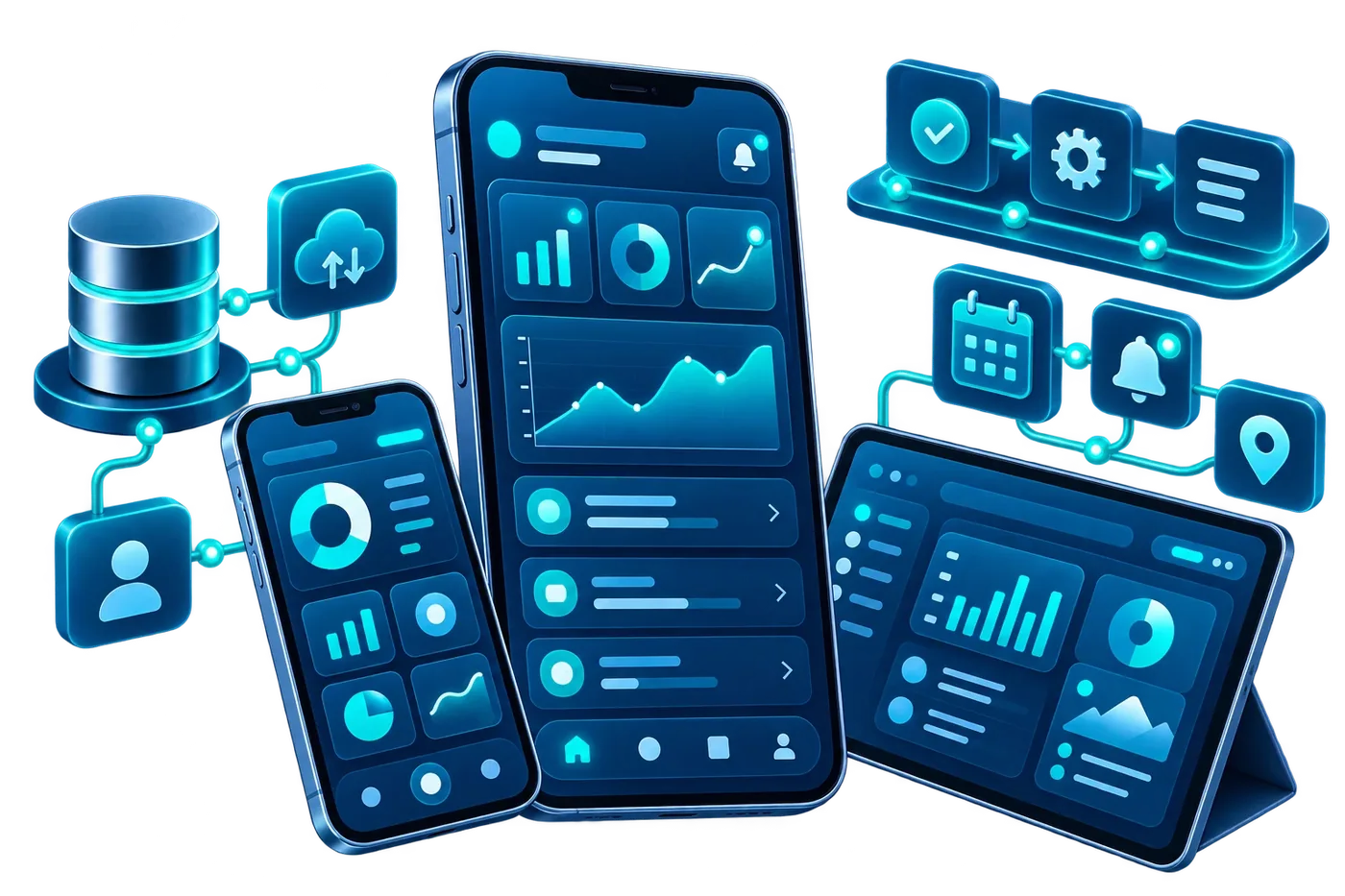
Depending on the project, the complete solution can include the mobile application, a connected database and a web-based administration dashboard for managing users, records, content and reports.
Each feature is included only when it supports a genuine requirement, so the first version stays focused and easy to use.
Clear screens and familiar interactions help users understand the application without unnecessary complexity.
Different access levels can be created for customers, employees, managers and administrators according to the project requirements.
Manage users, records, requests, content and activity through a central web-based control panel.
Keep important information organised and searchable instead of depending on scattered files or manual records.
Keep users informed about appointments, requests, approvals, assigned work and other important activity when required.
Allow users to submit information, photographs or supporting documents directly through the application.
Review useful information about users, submissions, tasks and other activities from the connected dashboard.
Plan the initial version around essential requirements while leaving room for suitable future modules and improvements.
Not every business needs a mobile app. In some cases, a responsive website or web application may be the simpler and more practical choice.
We begin by understanding who will use the app, what they need to do and why a mobile experience would be more useful than an ordinary website. This helps avoid unnecessary features and keeps the project focused on a genuine business need.
The interface is planned around the actual tasks users need to complete, keeping important actions clear and accessible.
The app can work with a secure database and administration dashboard so information remains organised in one system.
Forms, task updates, reminders and status tracking can reduce repeated calls, messages and manual follow-ups.
The project can be structured so suitable features and modules may be added as requirements develop.
Appointment and booking applications
Customer and client portals
Employee and field-work applications
Service-request and status-tracking apps
School and student-management apps
Inventory and stock-update applications
Lead and enquiry follow-up apps
Inspection, survey and checklist applications
Mobile companions for ERP or CRM systems
Custom internal business applications
Every project is reviewed individually. Features are confirmed only after understanding the users, workflow, data and expected outcome.
We discuss the business problem, intended users, required platforms, important features and expected outcome.
We determine whether a mobile app is the right solution and define the first practical version of the project.
The user journey is mapped so each screen, action and piece of information has a clear purpose.
The application screens are designed to remain clean, consistent and easy to use on common mobile sizes.
The data structure, administration tools and server-side functions are prepared according to the approved requirements.
The approved interface and functionality are developed and connected with the required business data.
Important user journeys, forms, permissions, devices and common usage conditions are checked before release.
The final application is prepared for handover or publishing, followed by agreed maintenance and improvement support.
The mobile approach is selected only after reviewing the required platforms, features, integrations, performance needs and future plans.
Supporting technologies may include:
PHP for server-side functionality
MySQL for organised data storage
JSON-based communication between the app and server
HTML5, CSS3, Bootstrap and JavaScript for administration dashboards
Git for version management
Suitable mobile-development technology selected for the approved scope
Third-party services, platform accounts and store-publishing requirements are discussed separately. Approval by an app store or another external provider cannot be guaranteed.
Tell us who will use the application, what problem it should solve and which tasks it needs to simplify. We will help you understand whether a mobile app, web application or another practical solution is the right fit.