Laxmi Vihar, Bhubaneswar, Odisha
Founder-Led Website, Software & ERP Development in Bhubaneswar, Odisha

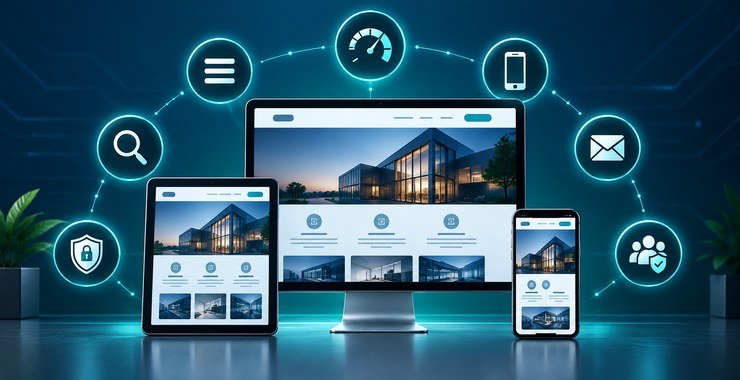
Use this 15-point checklist to review your small business website: clear message, mobile design, speed, trust, WhatsApp, local SEO, policies and regular upkeep.
Your website is often the first place people learn about your business. It should quickly explain what you offer, build trust and make it easy to get in touch. It does not need unnecessary features. It needs the right foundations.
The 15 points below are grouped in five parts. Use them to review an existing site, or as a brief when you plan a new one. Tick what is already done and fix the gaps in order.
Visitors should understand in a few seconds what you provide, who you serve and where you work. Use a direct heading that names the service, not "Welcome to Our Website".
Most small business sites work well with Home, About Us, Services, Our Work, Blog and Contact. Familiar menu names make the site easier to use.
A separate page for each important service lets you explain it properly and gives search engines something specific to show.
Many customers will visit from a phone. Text must stay readable, buttons must be easy to tap and forms must work without zooming or sideways scrolling. Test on a real phone, not only on a desktop.
A slow site makes visitors leave before they see your services. Properly sized images, clean code, reliable hosting and only the scripts you need all help. Consider speed during development, not only after launch.
Use sufficient contrast, a comfortable font size and one obvious main button per page, such as "Call now" or "Request a quotation".
Show real contact details, completed projects, verified testimonials, registrations and clear policies where they apply. Do not display awards or claims you cannot prove.
Put them in the header or footer and on the contact page. Make sure the phone number can be tapped to call on a mobile.
If you collect enquiries or run analytics, publish a privacy policy and terms. They protect both you and your customers.
Want help applying this list to your site? Send us your website address and we can talk through which points matter most for your business.
Talk to us about a website reviewEvery important page should lead to a next step: call, WhatsApp, request a quotation or fill in an enquiry form. Keep forms short and ask only for what you need to reply.
Many customers in India prefer to message first. A click-to-chat button with a ready message makes it easier for them to reach you.
Each important page needs a unique title, description, clear heading, descriptive URL and image alt text. Add a sitemap and set up Google Search Console. Mention your genuine location and service area naturally, without repeating place names. Our Local SEO service covers this in detail.
For a local business this is as important as the website. Link the two and keep the details identical. Follow our 10-step Google Business Profile checklist.
A website still needs attention after launch. Check forms, backups, software updates and security regularly. See our maintenance and support service if you would rather not do this yourself.
Update hours, prices, services and contact details whenever they change. An outdated site quietly loses customers.
You can score your own website quickly before you spend anything.
Count how many checks fail. Fix the broken forms and phone links first, since they cost you enquiries immediately, then the mobile layout, then the content.
For most small businesses, a website costs between ₹3,999 and ₹29,999 with us, depending on how many pages and features you need. These are the packages on our packages page:
Domain, hosting, premium plugins and GST are separate, and online stores are scoped and quoted separately. For a full breakdown, read what a business website costs in Bhubaneswar.
If your goal is to be found and trusted, you need a website. If your goal is to manage work inside the business, you may need software instead. Our comparison of website vs web application will help you decide.
Many businesses can begin with five pages: Home, About Us, Services, Our Work or Gallery, and Contact. More pages can be added when individual services need detailed explanations.
A static website works when information rarely changes. A dynamic website is more suitable when you want to manage blogs, projects, services or other content regularly.
A standard business website usually takes around two to four weeks after the requirements, content and necessary materials are confirmed. Custom features may require additional time.
Responsive design helps your website remain readable and usable across mobile phones, tablets and computers, giving visitors a consistent experience on different devices.
Forms, backups, updates and security should be checked regularly. Website content should also be updated whenever your services, contact details or business information change.